

changing water in aquarium
When waste products accumulates in your aquarium, the quality of water change. Problems will occur and the only way to solve it is physically changing water in aquarium.
It will remove the wastes and bring back the valuable trace elements your saltwater need for your fish to survive.
How much and how often?
There is really no set of rules for when, how often and how much water change should be done. So how do you decide?
Here are some recommendations and information that can help you run your own system and routine that works best for you and your saltwater aquarium.
Performing 20-30% of water volume per month is the common maintenance recommendation.
In most cases 15-20% water change is enough. It is better to perform 10-15% of water volume 2x a month than 20-30% water volume once a month.
Changing water in aquarium more frequently are more effective. It can also prevent potential poisoning or over exposure to medication, additives and other chemicals you put on your saltwater aquarium. It also helps in stability of pH balance.
Siphoning Water
Vacuuming the gravel while water is extracted is also a preferred maintenance method when you change your saltwater and is a good habit. Use gravel cleaner to siphon the saltwater. Other residues, wastes and uneaten foods that settle in your substrate will be gone.
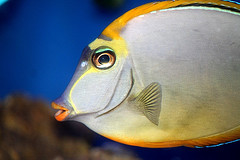
changing water in aquarium
The gravel in your saltwater aquarium is suctioned up and then tumbled back down.
Debris and waste materials are loosened during this process and are siphoned away keeping your tank looking physically clean. Do remember that siphon process maintenance may not be possible in tanks with sand substrate.
The surface gravel should be stirred during every partial water change for these reasons:
- If you have an undergravel filter, stirring breaks up impacted areas in the filter bed where water flow cannot really pass through.
- Stirring puts detritus into suspension where it can be siphoned out with the old water.
When you are changing water in aquarium, try to cover as much of the substrate as possible. But don’t rush over the spots. If you can’t cover it all, start at that spot where you left off the next time you change your water.
Adding Water
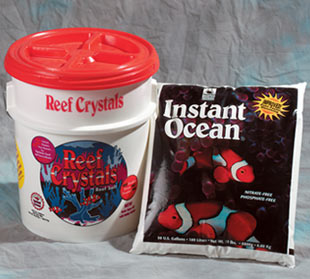
Sea Salt
Don’t forget to check the water temperature that you are about to pour in your saltwater aquarium. It is better to have a warmer saltwater than cooler saltwater or as close to the temperature in your saltwater aquarium as possible.
Add the water without disrupting your aquarium or your critters by doing it slowly and carefully.
Once the new saltwater is poured, add a high quality water dechlorinator/conditioner to the aquarium.
Using water conditioner after each and every water change can help remove chlorine and chloramines that are present in most municipal water.
Water out of your tap is usually loaded with chlorine, chloramines, heavy metals, phosphates and other ions.
Many of these compounds will harm you fish, so they need to be removed from the water.
The process is called water conditioning. You can read more about conditioning tap water here.
Another tip is to not be confused with changing water in aquarium is adding water that has evaporated from the aquarium. Depending on the amount of aeration and circulation that you have, you may have more or less water evaporation. When water evaporates, dissolved salts are left behind. This makes the specific gravity of water to increase. Severe problems can occur if significant change of specific gravity happens.
The solution for water evaporation is simply adding fresh water, not premixed conditioned saltwater to your aquarium. The water that you need to add should be conditioned tap water. But if you don’t have a lot of evaporation, store-bought bottled/distilled water will do. This way, it will save you time in conditioning tap water.
Distilled water is pure water, without additives and toxic compounds. Many aquarium shops sell filtered water specifically for saltwater aquariums.

Return from Changing Water in Aquarium to Saltwater Aquarium Maintenance
Return to Saltwater Aquarium Online Guide Main Page